Christa Pike’s Failed Execution: Should America Change Methods?
Christa Pike survived Tennessee’s failed lethal injection. Would the electric chair or firing squad be more reliable—or would older methods bring new risks?
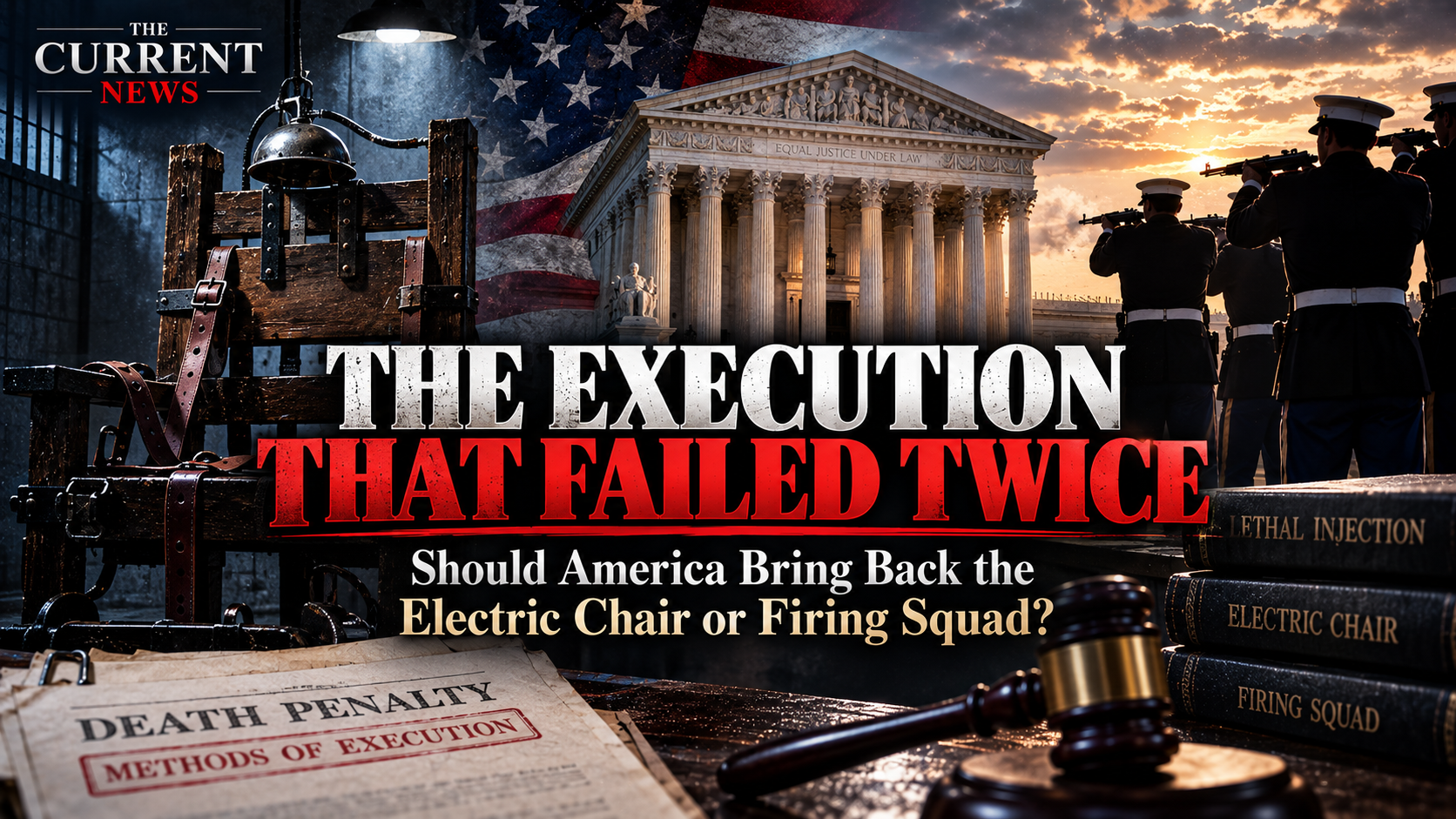
America’s death penalty debate has reached a moment few people could have imagined: a condemned woman was strapped to an execution gurney, given two doses of the state’s lethal-injection drug, and survived.
Christa Pike, Tennessee’s only woman on death row, was supposed to be executed on September 30, 2026. Instead, she was rushed to a hospital in critical condition. Her attorneys later reported that she regained consciousness, began speaking and walking, and eventually returned to prison. Tennessee Gov. Bill Lee ordered an independent review and paused the state’s remaining executions for the year. Source: Associated Press
The case has raised an uncomfortable question that reaches beyond Tennessee: If the government has the authority to impose a death sentence, does it have an obligation to ensure that the execution process actually works as intended?
And if lethal injection can fail so dramatically, should America return to older methods such as the electric chair or firing squad?
It is a difficult conversation, but it deserves more than slogans, partisan talking points, or the assumption that an older method must be a better one.
First, let’s get the facts straight
Pike was convicted of the 1995 torture and murder of her former classmate, Colleen Slemmer, who was 19 years old. Pike was 18 at the time of the crime and has spent decades on death row.
Those facts matter. The execution controversy does not erase the crime or the victim. Slemmer’s life and the suffering of her loved ones should not disappear from the conversation simply because the state’s attempt to carry out a sentence went wrong.
But a conviction and a state’s execution procedure are two separate issues.
A person can be lawfully sentenced to death while the government remains responsible for carrying out that sentence within constitutional limits. The severity of a crime does not excuse a government failure, and a failed execution does not automatically invalidate the underlying conviction.
According to reporting by the Associated Press, Pike received two doses of pentobarbital, the drug used under Tennessee’s lethal-injection protocol. She remained alive, suffered serious medical complications, and required emergency care. The precise explanation for why the procedure failed remains subject to investigation.
The incident was particularly striking because it was not simply a case in which officials struggled to establish an IV line and never administered the drugs. Pike survived after the execution procedure had proceeded to the point of drug administration. Experts described the event as unprecedented in the modern American death penalty era. Source: CBS News
The state must now answer a basic question: What happened, and why?
The problem with lethal injection
Lethal injection became the preferred execution method in much of the United States because it was presented as a more controlled, clinical alternative to older methods. Texas conducted the nation’s first lethal-injection execution in 1982.
The appearance of a medical procedure, however, does not guarantee a medically predictable outcome.
Texas and Tennessee both use pentobarbital under single-drug protocols. The Texas Department of Criminal Justice has said its procedure includes two IV lines and a medically trained member of the execution team. Texas also uses compounded drugs because pharmaceutical manufacturers have largely refused to supply drugs for executions. Questions about sourcing, testing, expiration dates, and the secrecy surrounding execution protocols have consequently become part of the legal debate. Source: The Texas Tribune
Tennessee’s failure does not prove that Texas’s next execution will fail. Nor does it establish that every lethal injection is ineffective. But it does raise legitimate questions about whether states can adequately verify their drugs, procedures, equipment, and contingency plans.
There is another concern: What happens when the procedure does not work?
The Associated Press reported that emergency assistance was delayed amid confusion after Pike’s failed execution. An initial 911 call was reportedly dismissed as unverified before officials confirmed the emergency. Source: Associated Press
If the state has a procedure for ending a life, it must also have a clear, workable response when that procedure produces a medical crisis. That is not an argument about whether Pike deserves sympathy or whether Slemmer deserves justice. It is a question of governmental responsibility.
Should America return to the electric chair?
The electric chair is often invoked as a more direct alternative. It does not depend on obtaining and administering a lethal drug through an IV, and its basic mechanism may appear more straightforward to the public.
But history offers a warning against confusing simplicity with reliability.
Electrocutions have gone wrong. In 1983, Alabama prisoner John Evans survived the first electrical application, and additional attempts were required before he died. In 1990, Florida’s execution of Jesse Tafero involved flames erupting from his head during the procedure. Other executions have involved repeated electrical applications, equipment problems, and prolonged deaths. The Death Penalty Information Center documents these and other cases in its historical record of botched executions. Source: Death Penalty Information Center
These are not merely technical footnotes. They demonstrate that changing the mechanism does not eliminate the possibility of human error, equipment failure, or severe suffering.
The electric chair may avoid some of the specific problems associated with lethal-injection drugs and IV access. But it introduces its own risks, and the historical record does not support treating it as a guaranteed solution.
The question is not simply whether electricity can kill. It is whether a state can demonstrate that its chosen method can be carried out reliably and constitutionally, with appropriate safeguards when something goes wrong.
What about the firing squad?
The firing squad has returned to the national debate as states confront problems obtaining execution drugs and defending their lethal-injection protocols.
Supporters argue that it avoids the uncertainties of drug sourcing and intravenous administration. It has also been used in a small number of modern American executions.
But the historical record is not flawless. In 1879, Wallace Wilkerson survived the initial shooting and reportedly suffered for an extended period before dying. More recently, a 2025 South Carolina execution prompted renewed scrutiny after an autopsy found that two of the three bullets had missed the condemned man’s heart. Source: Death Penalty Information Center
That does not mean every firing-squad execution has the same outcome. It does mean that the method cannot honestly be described as error-proof.
There is also an ethical distinction worth considering. A firing squad may appear more transparent because the physical act is visible and its mechanism is easier to understand. But visibility is not the same as humanity, and a method that avoids one category of technical failure can still create other risks.
A more visibly direct execution is not necessarily a more humane or more dependable execution.
Do the historical numbers tell us which method works best?
The Death Penalty Information Center, citing historical research, lists the following execution and botched-execution figures for 1890–2010:
MethodExecutions recordedClassified as botchedHanging2,72185Electrocution4,37484Lethal gas59332Lethal injection1,05475Firing squad340
Source: Death Penalty Information Center
At first glance, those numbers might seem to settle the debate. They do not.
The figures cover different periods, methods, and numbers of executions. The firing-squad sample is particularly small, and the definition of a botched execution depends on the underlying historical records and research criteria. The figures also end in 2010 and cannot be used as a current comparison of every modern protocol.
Most importantly, these statistics do not measure every dimension of suffering, pain, delay, or constitutional risk.
The responsible conclusion is not that one method has been proven universally superior. It is that execution methods have different failure modes, and the public deserves transparent evidence about those risks rather than assurances based solely on tradition or confidence.
The bigger question: Is the state prepared to carry out the sentence it imposes?
The strongest argument for reconsidering execution methods is not nostalgia for an older era. It is the expectation that government must be accountable for its most consequential actions.
If a state imposes a death sentence, it should be able to explain the method it uses, the safeguards surrounding it, the evidence supporting its reliability, and the response required when something goes wrong.
That means independent reviews, meaningful access to relevant records, credible testing and quality controls, and a clear emergency plan. It also means that officials must not treat a failed execution as a public-relations inconvenience.
The public should be able to distinguish a genuine technical explanation from a statement that merely insists the protocol was followed. In Pike’s case, Tennessee officials said the established protocol was followed, yet the intended outcome did not occur. That discrepancy is exactly why an independent review matters.
Texas should pay attention, too. Its use of the same drug does not make its protocol identical to Tennessee’s, but the failure in Tennessee gives Texas officials and the public a reason to ask hard questions about their own safeguards.
The goal should not be to rush toward another method simply because the current one has failed. It should be to establish what happened, identify the cause, and determine what changes—if any—are justified by the evidence.
The other question we cannot ignore: What does justice require?
There are two realities in this debate.
First, victims and their families can spend years waiting for a sentence to be carried out. For them, a failed execution can reopen an already painful chapter and raise doubts about whether the justice system can deliver the outcome it promised.
Second, the government has a duty to follow the law even when the person facing execution has been convicted of a horrific crime. That duty is not a reward for the condemned. It is a limit on the power of the state.
People who support capital punishment may reasonably demand that sentences be carried out lawfully and consistently. People who oppose it may view the Pike case as evidence that execution itself carries unacceptable risks. Others may support the death penalty while questioning whether any available method meets the necessary standards.
Those positions deserve to be discussed honestly. But none should be allowed to turn an unresolved technical failure into a claim that the evidence has not yet established.
And one more distinction matters: Pike’s survival does not, by itself, answer whether the death penalty should exist. It does, however, demand a serious accounting of how the state attempted to carry it out.
The Current News Bottom Line
Christa Pike’s failed execution has forced America to confront a question that should never have been treated as merely theoretical: What happens when the government’s machinery of death does not work as intended?
The electric chair and firing squad are not magic solutions. Historical executions using both methods have gone wrong, sometimes with terrible consequences. Lethal injection has its own documented problems, and Pike’s survival has made those concerns impossible to dismiss as abstract debate.
So should America go back to the old methods?
Before choosing a replacement, the public deserves a transparent investigation into what happened in Tennessee and a careful, evidence-based comparison of the available options. If a state cannot demonstrate that its procedure is lawful, adequately safeguarded, and capable of responding to foreseeable failures, simply switching to a different mechanism will not answer the underlying question.
Justice must account for victims. Government must be accountable for its actions. And the death penalty, whatever one’s position on it, cannot be exempt from scrutiny just because the sentence is final.
The Current News Question
If the government is going to carry out the death penalty, should it keep refining lethal injection, return to an older method, or reconsider whether any execution method can meet the standard of reliability and humanity the state should be required to uphold?
The answer should be guided by evidence—not nostalgia, anger, or the assumption that a method is dependable simply because it is familiar.
Editorial & Legal Note
Christa Pike was convicted of murder and remains under a death sentence. The September 30, 2026, execution attempt did not result in her death, and Tennessee has ordered a review. The cause of the failure remains under investigation. This article discusses execution methods and government accountability; it does not claim that any method is guaranteed to be painless or error-free.