Cornell 7: Text Messages, Sexual Culture and Consent
Newly reported Cornell 7 texts raise questions about consent, social pressure, campus culture, and the influence of modern sexual messaging.
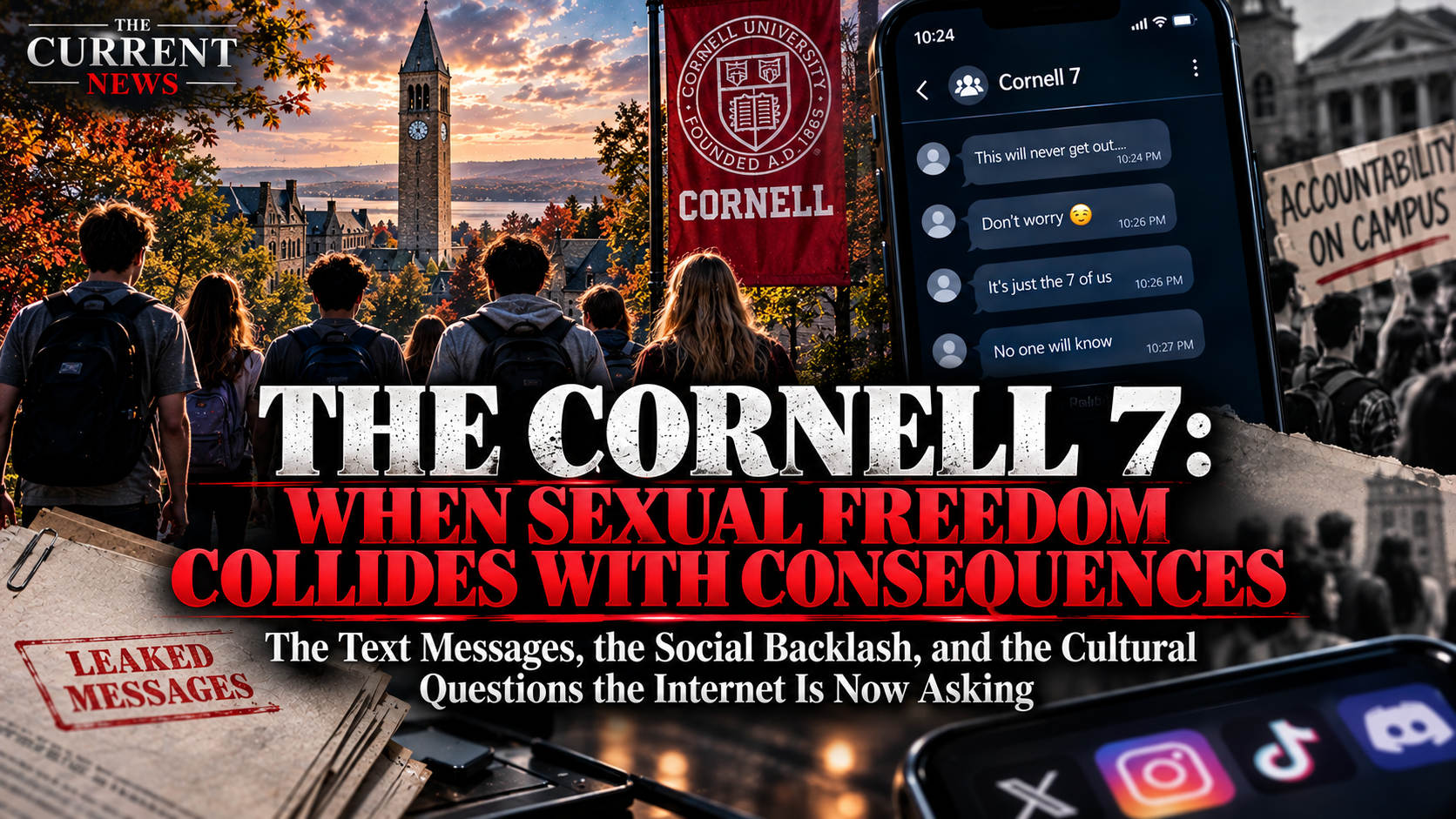
The Cornell 7 case has become a national controversy over sexual assault, fraternity culture, university accountability, and the handling of allegations. But the newly reported text messages have also opened a more complicated discussion: What happens when a sexual encounter is initially described in positive terms, later characterized as largely nonconsensual, and becomes the subject of campus rumors and social pressure?
That question deserves careful examination.
The messages do not establish that the encounter was consensual in its entirety. They also should not be ignored simply because they complicate the allegations. They are part of a timeline that investigators, the courts, and the public must understand.
For a conservative publication, this case also raises a broader cultural question: In an era when popular entertainment celebrates sexual freedom and casual relationships, are young adults being encouraged to think seriously enough about boundaries, judgment, and responsibility?
That discussion is legitimate. But it must begin with the evidence—not assumptions about a person’s character.
What the messages reportedly show
The alleged encounter occurred at Cornell University’s Chi Phi fraternity house during the early morning hours of October 20, 2024.
In text messages obtained by CBS News and previously reported by ABC News, Jane Doe communicated with fraternity members in the days that followed. The exchanges show a timeline more complicated than a single, unchanging account.
On October 21, Jane Doe reportedly told one fraternity member that her memory was clouded and that she believed everyone had been very intoxicated. In the same exchange, she wrote that she had liked being with two men and did not believe the sexual activity was illegal. She also objected to other men entering the room, distinguishing the initial encounter from what allegedly happened afterward.
Later in that same exchange, she wrote that 90% of what happened was not consensual and described feeling like a “sex doll/worker.” The messages therefore contain both an initially positive description of part of the encounter and a serious objection to other parts.
That distinction is essential.
Consent is not an all-or-nothing label that applies automatically to an entire evening. A person may agree to one sexual act without agreeing to another, and consent to intimacy with one person does not automatically extend to additional people.
At the same time, the chronology matters. When someone describes an encounter differently over time, investigators should examine the circumstances surrounding each account, including intoxication, memory, communications, and the conduct of everyone involved.
The messages are evidence to be assessed, not a verdict in themselves.
The timeline—and the social pressure surrounding it
The encounter occurred on October 19–20. The first reported messages between Jane Doe and one of the fraternity members followed on October 21. In those messages, she discussed the encounter, their relationships, and rumors beginning to circulate.
By October 23, she was expressing distress about her reputation. According to the timeline published by Good Morning America, she wrote that her reputation was destroyed and that she was ashamed. She also discussed changing attitudes toward sexuality and described herself as open-minded.
In another message from October 21, she reportedly said she was receiving criticism from women in her social circle. Later exchanges continued to discuss rumors, who had shared information, and whether she would be welcome at fraternity events.
These details raise an important question: How much did the social environment affect the way the encounter was discussed and understood afterward?
The available messages show that social pressure and reputational concerns were part of the aftermath. They do not establish that those concerns caused Jane Doe to make an allegation or report the incident to police. That would require evidence beyond the fact that criticism and rumors were circulating.
The reported chronology nevertheless deserves attention. The initial messages came shortly after the encounter, the language in the exchanges developed over the following two weeks, and Jane Doe later reported the incident to police in November 2024.
A careful examination should ask what changed, when it changed, and why—without assuming the answers in advance.
The role of Call Her Daddy and modern sexual culture
Another detail now circulating online is the claim that Jane Doe follows Alex Cooper, the host of Call Her Daddy, on Instagram.
Cooper’s podcast is known for explicit discussions of sex, dating, relationships, and sexual autonomy. Its official listing describes the show as a platform for candid conversations and provocative topics.
If the reported Instagram connection is accurate, it may offer an opening for a broader discussion about the cultural environment in which young adults navigate intimacy. But a social-media follow does not establish how often someone listens, what they believe, or whether they endorse every message a host expresses.
The more useful question is what popular culture teaches its audience about sex and relationships.
Much of contemporary entertainment treats sexual experimentation as a form of liberation. For some people, that means rejecting shame and speaking openly about subjects previous generations avoided. For others, the same culture can appear to encourage impulsive decisions, casual intimacy, and a belief that personal consequences can be separated from sexual choices.
A conservative perspective can challenge that message without condemning every person who consumes the entertainment.
Sexual freedom and personal responsibility are not mutually exclusive. But freedom without sound judgment can leave people poorly prepared to navigate intoxication, peer pressure, unclear boundaries, and emotionally complicated situations.
A culture that celebrates sexual openness should also take consent seriously. It should teach people to communicate boundaries, recognize when someone may not be capable of making decisions, and understand that the presence of alcohol or drugs can make an already complicated situation more dangerous.
Those standards apply to men and women alike.
Sexual openness is not consent—and criticism is not proof
The cultural discussion becomes dangerous when it turns into a shortcut for deciding what happened in a particular case.
Someone may enjoy sexually explicit entertainment, support casual relationships, or describe themselves as open-minded and still have firm boundaries. A person may also make decisions they later regret without having been assaulted. Neither possibility can be resolved by looking at a podcast subscription or Instagram following.
The same principle applies to the messages.
Jane Doe’s initial statement that she liked being with two men is relevant to understanding how she described part of the encounter at that point in time. Her reported objection to other men entering the room is also relevant. So is her later statement that most of what happened was not consensual.
The task is to determine what occurred during each part of the encounter, what each person understood, and whether the people involved were capable of giving consent.
A person’s social-media activity cannot answer those questions.
Nor does the existence of social backlash establish that an allegation was fabricated. People may face criticism after reporting an assault, and people may also experience reputational pressure during a disputed event. The evidence must establish what happened in this particular case.
A serious investigation should neither dismiss inconvenient messages nor treat them as conclusive.
The men involved deserve the same evidentiary standard
The Cornell 7 allegations involve seven former fraternity members. The men named in the civil lawsuit have denied wrongdoing, and they have not been criminally charged. Cornell’s separate Title IX process reached disciplinary findings against some students.
Those distinctions matter because a civil lawsuit, a university disciplinary proceeding, and a criminal prosecution operate under different rules and standards.
The public should be able to scrutinize the text messages and ask hard questions without declaring the accused guilty before the facts are adjudicated. Likewise, Jane Doe’s changing descriptions should be examined without assuming that the differences automatically disprove her allegations.
Fairness is not selective. It requires the same commitment to evidence regardless of whether a particular detail helps or hurts the narrative someone prefers.
The criminal investigation has also been reopened, with New York Attorney General Letitia James appointed as special prosecutor. That makes it especially important to distinguish reported evidence from conclusions that have not yet been established.
What does this say about campus culture?
The controversy also extends beyond the individuals involved.
The reported fraternity group chat included messages that appeared to discuss a woman upstairs as an opportunity for sex. That language, if accurately represented, raises serious questions about how some participants viewed the situation and whether they recognized the responsibilities that come with sexual encounters.
But a group-chat message does not automatically establish what every member knew or did. Investigators must determine who participated, who was present, what each person understood, and what conduct can be attributed to each individual.
More broadly, colleges and fraternities have a responsibility to create environments where consent is understood, intoxication is taken seriously, and students are not treated as entertainment or status symbols.
That responsibility does not depend on whether the people involved hold conservative or progressive views about sex. It depends on whether institutions and individuals uphold basic standards of respect and accountability.
The Current News Bottom Line
The Cornell 7 case presents a difficult timeline. The reported messages show that Jane Doe initially described parts of the encounter positively, objected to other people entering the room, and later said that most of what happened was not consensual. They also show that rumors, social pressure, and concerns about her reputation were part of the aftermath.
Those facts deserve scrutiny. They do not, by themselves, establish why her account developed over time or determine whether a crime occurred.
The reported Instagram connection to Alex Cooper opens a separate cultural discussion about sexual freedom, popular entertainment, and personal responsibility. But it cannot serve as evidence of consent, motive, or credibility.
A conservative critique of modern sexual culture is strongest when it applies its principles consistently: freedom comes with responsibility, boundaries matter, and every person is accountable for their conduct. None of those principles eliminates the need to establish what actually happened.
The public deserves a serious examination of the messages, a fair process for the accused, and an investigation that distinguishes facts from speculation.
The question is not whether someone is sexually open-minded. The question is whether the evidence establishes that everyone’s boundaries were respected.
The Current News Question
Can modern culture promote sexual freedom while still teaching the boundaries, judgment, and responsibility necessary to protect everyone involved?
And in a case as serious as Cornell 7, can the public examine uncomfortable evidence without turning either the accuser’s personal life or the accused men’s reputations into substitutes for a fair investigation?
Editorial & Legal Note
This article relies on publicly reported text messages and investigative reporting. The reported Instagram connection to Alex Cooper has not been independently verified by this publication and is not presented as evidence of Jane Doe’s beliefs or conduct. The messages described here do not independently establish consent, lack of consent, or motive. The civil allegations remain disputed, the accused men have denied wrongdoing, and no criminal charges have been filed. All claims should be evaluated in context as the investigation proceeds.