Illinois Mom Was Invested in Lindsay Clancy Trial Before Son's Death
Illinois mother Corie Walsh was reportedly discussing the Lindsay Clancy trial hours before her 2-year-old son died.
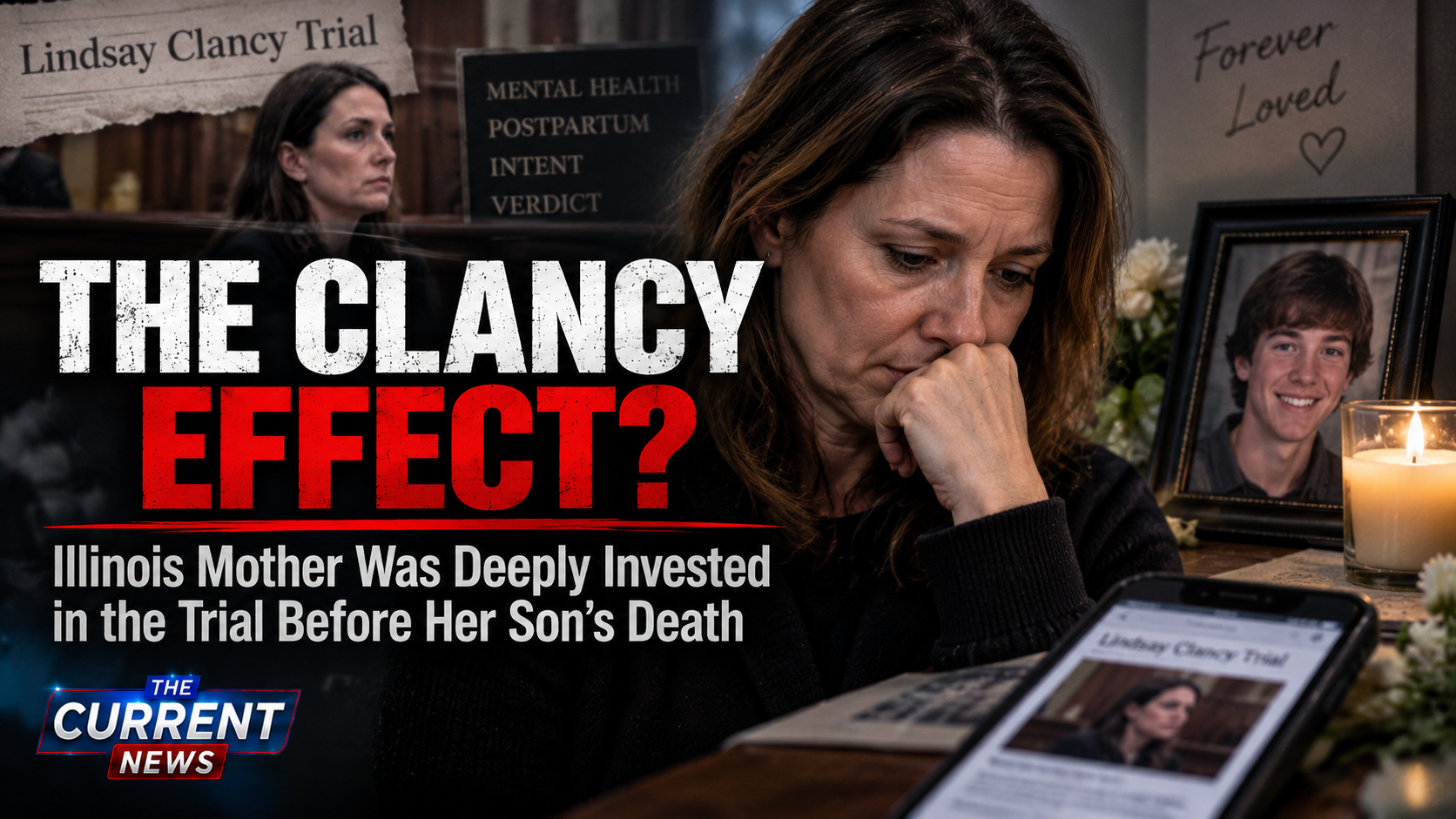
There is a disturbing development emerging from the Lindsay Clancy story—one that almost sounds like something written for a true-crime television series.
Except this isn’t television.
It happened in Illinois.
And a 2-year-old boy is dead.
As the Lindsay Clancy jury was deliberating in Massachusetts, another mother, 40-year-old Corie Walsh of Frankfort, Illinois, was reportedly following the case closely and discussing it with friends.
According to prosecutors, Walsh was still discussing the Clancy case in a group text approximately three and a half hours before her 2-year-old son, Barrett, was discovered in the family’s basement.
Now Walsh has been charged with first-degree murder.
And investigators say the circumstances surrounding Barrett’s death are horrifying.
But perhaps the biggest question isn’t simply what happened in that Illinois home.
It’s this:
How much was the Lindsay Clancy case occupying Corie Walsh’s mind before tragedy struck her own family?
TWO MOTHERS. TWO STATES. TWO TRAGEDIES.
The parallels are difficult to ignore.
Lindsay Clancy became nationally known after being accused of killing her three children in Duxbury, Massachusetts, in January 2023.
Her defense centered on severe mental illness and postpartum psychosis.
After nearly six weeks of testimony, her trial ended in a mistrial when jurors couldn’t reach a unanimous verdict.
Then, while the Clancy jury was still deliberating, prosecutors say Walsh was intensely discussing that very case.
Hours later, her own 2-year-old son was found dead.
The circumstances are not identical.
The legal cases are not identical.
And there is currently no evidence establishing that the Clancy case caused Walsh to kill her son.
But the timing is undeniably disturbing.
SHE WASN’T JUST CASUALLY FOLLOWING THE CASE
According to a court filing cited by multiple news organizations, witnesses told investigators Walsh had recently become “very invested” in the Lindsay Clancy trial.
Prosecutors allege she was actively discussing the case through a group text with friends until approximately 12:30 p.m. on September 1.
Her son was discovered approximately three and a half hours later.
That detail immediately raises questions.
What exactly was Walsh saying?
What aspects of the Clancy trial was she discussing?
Was she talking about postpartum psychosis?
Was she talking about the insanity defense?
Was she identifying with Clancy?
Or was she simply fascinated by one of the most closely watched criminal trials in America?
At this point, we don’t know.
And that’s important.
THEN CAME THE 911 CALL
According to prosecutors, a neighbor went to the Walsh residence and discovered Barrett in the basement.
The neighbor reportedly began performing CPR and called 911.
Police arrived and found Walsh upstairs.
Prosecutors allege she had injured herself and that the neighbor had intervened to stop her from further harming herself.
The child was transported for emergency medical treatment but died.
Walsh was also taken to a hospital.
And then investigators began piecing together what had happened.
THE STATEMENTS THAT FOLLOWED
According to the prosecution’s court filing, Walsh allegedly told officers that she had done this to her child because he was the “devil” and the “anti-Christ.”
Those alleged statements are among the most disturbing elements of the case.
They also appear to be part of the reason Walsh’s attorney is describing what happened through the lens of severe mental illness.
Her attorney, Andrea Lyon, said Walsh was experiencing a psychotic episode at the time of the incident.
That doesn’t establish a legal defense.
It is the defense’s characterization of her mental state.
The court will ultimately have to determine what happened and what legal responsibility follows.
THE CLANCY CONNECTION
This is where this story becomes particularly difficult.
Lindsay Clancy’s defense argued that she wasn’t criminally responsible for killing her children because of postpartum psychosis.
The prosecution argued that Clancy understood what she was doing and was criminally responsible.
The jury ultimately couldn’t agree.
One reported holdout prevented a unanimous verdict.
And while that jury was deliberating, Walsh was reportedly discussing the case with friends.
Then her son died.
The parallel is unsettling.
But parallel does not mean causation.
That distinction must remain front and center.
DID SHE “COPY” LINDSAY CLANCY?
That’s the question many people are already asking.
But we should slow down.
There is currently no evidence proving that Walsh deliberately decided:
“I’m going to do what Lindsay Clancy did.”
There is no established evidence that she planned to recreate Clancy’s crime.
There is no established evidence that she was attempting to obtain the same legal defense.
And there is no established evidence that watching or discussing the Clancy trial caused the killing.
What we know is narrower:
She was reportedly deeply interested in the Clancy case.
She discussed it with friends shortly before her son’s death.
Her son subsequently died.
She was charged with murder.
Her attorney says she was experiencing psychosis.
Everything beyond those facts needs evidence.
BUT COULD TRUE CRIME CONTENT INFLUENCE SOMEONE?
This is where the story gets bigger than either Clancy or Walsh.
Millions of Americans consume true crime.
We watch documentaries.
We listen to podcasts.
We follow courtroom livestreams.
We join Facebook groups.
We argue about defendants on Reddit.
We dissect testimony on TikTok.
We follow every courtroom development.
For most people, it’s simply information or entertainment.
But what happens when someone already experiencing a severe mental-health crisis becomes deeply immersed in a story involving someone whose circumstances resemble their own?
That’s a legitimate question for psychologists and researchers.
And it deserves serious examination—not sensationalism.
THE DANGER OF TURNING A CRIMINAL CASE INTO A BLUEPRINT
There is another uncomfortable possibility.
When high-profile criminal cases are discussed online, audiences don’t just hear about the crime.
They hear about:
The defense.
The psychiatric diagnosis.
The prosecution’s arguments.
The defendant’s statements.
The sentence.
The legal loopholes—or perceived loopholes.
The public sympathy.
The media attention.
That doesn’t mean someone will imitate a crime.
But it does mean that vulnerable individuals may consume information very differently from the average viewer.
That’s why responsible coverage matters.
AND THIS IS WHERE THE CLANCY CASE BECOMES RELEVANT AGAIN
The Clancy trial wasn’t simply about three deaths.
It became a national conversation about postpartum psychosis, psychiatric treatment, criminal responsibility and whether severe mental illness can fundamentally alter a person’s perception of reality.
The defense presented Clancy as someone experiencing a profound psychiatric crisis.
The prosecution presented a very different interpretation.
The jury couldn’t resolve the disagreement unanimously.
And now, in another state, prosecutors are describing another mother who allegedly experienced psychosis after reportedly becoming intensely interested in that very case.
That deserves scrutiny.
But it doesn’t deserve a conspiracy theory.
BARRETT IS THE PERSON WHO SHOULD NOT GET LOST
This is perhaps the most important part of this story.
The media can easily become fascinated by the Clancy connection.
“She was obsessed with the trial.”
“She talked about Clancy hours before the killing.”
“Did she copy Clancy?”
Those headlines generate clicks.
But behind them is a 2-year-old boy.
His name was Barrett “Bear” Walsh.
He should not become merely a footnote in another true-crime story.
He was a child.
A son.
A brother.
A member of a family.
And his death is now being investigated as a homicide.
THERE WAS ANOTHER CHILD IN THE HOME
According to the court documents cited by ABC News, another infant was present in the home at the time of the incident and was not harmed.
Prosecutors have also alleged that Walsh made statements concerning harm to her other children and her husband.
Those allegations are extraordinarily serious.
They also remain allegations.
The court will have to determine what happened, what Walsh’s mental state was and what evidence supports the prosecution’s claims.
HER ATTORNEY IS ALREADY RAISING MENTAL ILLNESS
Walsh’s attorney has stated that her client was experiencing a psychotic episode when the incident occurred.
That immediately creates another connection to the Clancy case.
But there’s a major distinction.
Mental illness does not automatically equal legal insanity.
A person can suffer from a serious psychiatric disorder and still be legally responsible for criminal conduct.
The precise legal standard depends on the jurisdiction and the evidence.
That’s why Walsh’s mental state will likely become an important part of the proceedings.
TWO CASES THAT SHOULD NOT BE MERGED
As tempting as the similarities are, we need to keep these cases separate.
Lindsay Clancy is not Corie Walsh.
Cora, Dawson and Callan are not Barrett.
The circumstances are different.
The evidence is different.
The jurisdictions are different.
The defendants’ histories are different.
And the legal questions may ultimately be different.
The Clancy case should provide context—not a conclusion.
SOCIAL MEDIA WILL WANT AN ANSWER TONIGHT
And that’s where things can go sideways.
People will say:
“She copied Clancy.”
Others will say:
“Clancy caused this.”
Others will blame true crime.
Others will blame the mental-health system.
Others will blame the media.
Others will argue that this proves the Clancy defense was dangerous.
And still others will use Walsh’s case to relitigate the Clancy trial.
But none of those conclusions have been established.
We have a criminal investigation.
We have prosecutors’ allegations.
We have a defense attorney’s statement.
And we have a child who is dead.
That’s enough to demand serious questions.
It isn’t enough to manufacture answers.
PERHAPS THE BIGGEST QUESTION IS ABOUT WHAT WE CONSUME
The modern true-crime audience has unprecedented access to criminal cases.
We can watch hearings from our phones.
We can listen to attorneys analyze testimony.
We can read thousands of comments about defendants.
We can become deeply invested in cases involving people we’ve never met.
And sometimes, as this case demonstrates, the line between watching a case and personally identifying with a case may deserve more attention.
We don’t yet know whether that happened here.
But investigators apparently believe Walsh’s interest in the Clancy case was significant enough to document it in their court filing.
That fact alone is worth examining.
THE CURRENT NEWS BOTTOM LINE
A mother in Illinois is accused of killing her 2-year-old son.
Her attorney says she was experiencing a psychotic episode.
Prosecutors allege she made disturbing statements about her child and had expressed intentions involving other family members.
And sitting directly alongside those allegations is a bizarre detail:
She had reportedly become deeply invested in the Lindsay Clancy murder trial.
According to prosecutors, she was discussing the Clancy case with friends by text until approximately three and a half hours before her son was discovered.
That doesn’t prove she copied Clancy.
It doesn’t prove the trial caused what happened.
It doesn’t prove that true crime content is responsible.
But it does raise a question that deserves serious consideration:
What happens when someone experiencing a psychiatric crisis becomes deeply immersed in a real-life case involving another mother, another mental-health defense and another dead child?
We may never know exactly what was happening inside Corie Walsh’s mind.
But investigators, prosecutors, defense attorneys and mental-health professionals will now have to try to understand it.
And as the story develops, The Current News will separate what we know from what we think we know.
Because when a 2-year-old is dead, speculation isn’t enough.