Lindsay Clancy Jury: Did Race or Gender Matter?
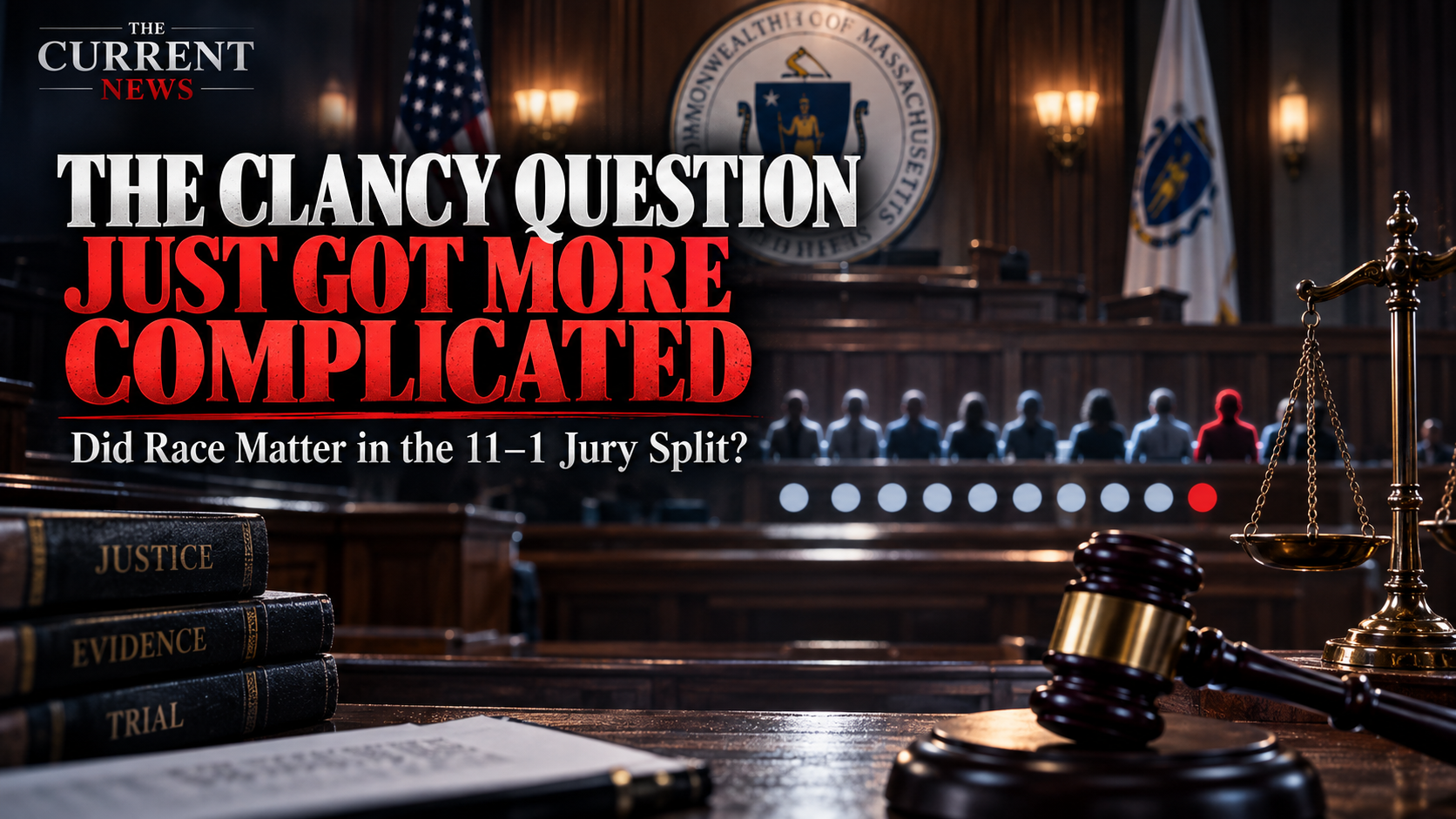
The Clancy jury was 9 women and 3 men, with one Black male holdout. What does the 11–1 split actually tell us about race and gender?
A few weeks ago, we asked a question that became one of the most-read stories we’ve published about the Lindsay Clancy case:
Would gender matter?
At the time, we knew the Clancy jury consisted of nine women and three men.
That demographic immediately became part of the public conversation.
Would a jury made up predominantly of women view a case involving a mother, postpartum psychosis and the deaths of three children differently?
We didn’t—and couldn’t—know the answer.
Then the jury deadlocked.
11–1.
Eleven jurors ultimately favored finding Lindsay Clancy not criminally responsible.
One juror refused.
And now, after jurors have begun speaking publicly, we know something we didn’t know when we wrote that first article:
The lone holdout was a Black man in his 30s.
Juror Paula Devlin disclosed the information during an interview with CBS. She said the jury consisted of nine women and three men, that 11 jurors were white and that the only Black juror was the man who ultimately voted to convict.
Suddenly, the question we asked before has become considerably more complicated.
Because if we’re going to ask whether gender mattered, shouldn’t we also ask whether race mattered?
The answer, however, isn’t nearly as simple as the demographics might make it appear.
THE NUMBERS ARE STRIKING
Let’s lay out what we actually know.
The jury:
12 total jurors
9 women
3 men
11 white jurors
1 Black juror
The Black male juror was the lone holdout
The other 11 jurors voted that Clancy was not criminally responsible according to jurors who have spoken publicly.
Those numbers are undeniably striking.
But they’re also incredibly easy to overinterpret.
The fact that the only Black juror was the only juror who voted for conviction does not establish that his race caused his decision.
Likewise, the fact that nine women were on the jury and 11 jurors voted for a finding of lack of criminal responsibility does not establish that gender caused the majority’s position.
Correlation is not causation.
That’s especially important in a criminal case involving twelve individual people who heard weeks of testimony, hundreds of exhibits and competing psychiatric explanations.
BUT OUR ORIGINAL QUESTION STILL MATTERS
When we published our previous story asking whether gender could matter, the question wasn’t whether every woman would automatically sympathize with Clancy.
It was whether the lived experiences of jurors could potentially influence how they process evidence.
That’s a legitimate question.
A mother might hear evidence about postpartum mental illness differently than someone who has never experienced pregnancy.
A father might process the deaths of children differently.
Someone who has personally experienced depression or psychiatric treatment might interpret expert testimony differently.
And someone who has never encountered severe mental illness might approach the same testimony from a completely different perspective.
Jurors are human beings.
They don’t enter the courtroom as blank computers.
But that doesn’t mean we can look at a person’s demographic characteristics and predict their vote.
NOW ADD RACE TO THE CONVERSATION
The revelation about the holdout adds another demographic variable.
The only Black juror was the only person on the panel who ultimately rejected the majority’s conclusion.
That is a fact.
What isn’t a fact is why.
We don’t know that he voted the way he did because he was Black.
We don’t know that he saw the case through a racial lens.
We don’t know whether race entered his deliberations at all.
In fact, the public comments attributed to him point toward a different explanation.
Michael P. Desronvil, who has since publicly identified himself as the holdout, has said he believed the evidence demonstrated that Clancy knew what she was doing and was criminally responsible. The other jurors have disputed aspects of his reasoning and described significant disagreements during deliberations.
That’s important.
His stated explanation is about the evidence—not race.
THEN WHY DOES THE DEMOGRAPHIC DETAIL MATTER?
Because jury composition is part of the story.
Not because demographics determine verdicts.
But because juries are groups of people, and group dynamics can be complicated.
Imagine twelve people sitting in a room for days discussing whether a mother should be held criminally responsible for killing her three children.
They aren’t simply discussing a legal textbook.
They’re discussing morality.
Mental illness.
Motherhood.
Parenthood.
Intent.
Responsibility.
Death.
Trauma.
And the meaning of justice.
Those conversations are going to involve deeply held beliefs.
The remarkable thing about this jury isn’t simply that it split.
It’s how dramatically it split.
Eight jurors initially leaned toward finding Clancy not responsible, two were undecided and two favored guilt, according to Devlin’s account. The final reported division became 11–1.
Somewhere during those deliberations, ten people moved toward the same conclusion.
One didn’t.
That deserves examination.
WAS THE HOLDOUT AN OUTLIER OR A PRODUCT OF HIS BACKGROUND?
This is where we need to resist the temptation to create an easy explanation.
There are two very different questions:
Was his background relevant to his personal perspective?
Potentially.
Can we conclude his race caused him to vote differently?
No evidence currently establishes that.
People’s backgrounds can influence how they interpret the world without completely determining their decisions.
A Black juror can disagree with other Black jurors.
A woman can disagree with other women.
A father can disagree with another father.
A Christian can disagree with another Christian.
And a person from the same demographic group can reach completely different conclusions from the same evidence.
That’s precisely why jury trials require individual judgment.
THERE’S ANOTHER DETAIL WE SHOULD NOT IGNORE
The jury wasn’t simply divided along gender.
It wasn’t simply divided along race.
According to juror accounts, the panel initially contained eight jurors leaning toward not responsible, two undecided and two leaning guilty.
That means the ultimate 11–1 division developed through deliberations.
And that makes the interpersonal dynamics potentially more important than the demographic statistics alone.
What arguments convinced people?
What evidence did they revisit?
What did they disagree about?
Which witnesses mattered most?
How did they interpret the psychiatric testimony?
Those questions can potentially tell us much more than a demographic chart.
THE HOLDOUT’S OWN WORDS MATTER
The holdout has now publicly defended his decision.
Desronvil has said that he did not have doubts about Clancy’s criminal responsibility and believed the evidence showed that she knew what she was doing. His account differs from some of the other jurors’ descriptions of the deliberations, particularly regarding whether he ever acknowledged reasonable doubt.
That disagreement is significant.
Because now we’re not simply looking at:
11 white jurors versus 1 Black juror.
We’re looking at:
11 people who interpreted the evidence one way versus 1 person who interpreted it differently.
The race of that one person is relevant context.
But it isn’t necessarily the explanation.
AND THIS IS WHERE SOCIAL MEDIA GETS DANGEROUS
The internet loves a simple explanation.
“Nine women saved her.”
“The Black juror refused to let them.”
“Gender decided the case.”
“Race decided the case.”
Each of those statements takes a complicated six-week trial and reduces it to a demographic headline.
That’s incredibly tempting.
It’s also potentially misleading.
The jury didn’t spend seven days discussing a demographic survey.
They discussed evidence.
They discussed the law.
They discussed psychiatric testimony.
They discussed criminal responsibility.
And eventually, they couldn’t agree.
WHAT WE CAN ACTUALLY SAY
There are several things we now know.
The jury was overwhelmingly female.
The jury was overwhelmingly white.
The lone Black juror was male.
He was also the lone holdout.
The other jurors believed Clancy was not criminally responsible.
He believed she was.
And his decision resulted in a mistrial.
Those are facts.
What we cannot responsibly say is that his race caused his vote.
We also cannot say that the women’s gender caused the other eleven votes.
That would require evidence that simply isn’t available.
MAYBE THE MORE IMPORTANT QUESTION IS WHY WE WANT RACE OR GENDER TO EXPLAIN IT
This case has become a fascinating example of how Americans try to understand disagreement.
When twelve people hear the same evidence and eleven reach one conclusion while one reaches another, we instinctively search for an explanation.
Was it politics?
Gender?
Race?
Religion?
Parenthood?
Personal experience?
Personality?
Or simply a different interpretation of the evidence?
Maybe it’s some combination of several factors.
Maybe it’s none of them.
That’s the frustrating thing about human decision-making:
We don’t always get a clean answer.
THE NEXT CHAPTER MAY GIVE US MORE INFORMATION
The controversy surrounding the holdout juror has continued well beyond the mistrial.
Clancy’s attorney Kevin Reddington has asked Judge William Sullivan to investigate alleged juror conduct, including claims concerning cellphone use during deliberations and questions about the juror’s answers during jury selection. Those allegations remain allegations, and the judge has not established them as fact. A hearing is scheduled for September 29.
Meanwhile, the prosecution has not announced whether it will retry Clancy.
So the story isn’t finished.
And if there is another trial, the composition of the next jury will undoubtedly receive enormous attention.
But perhaps the lesson from this jury is that we should be cautious about predicting what twelve people will do simply by looking at who they are.
THE CURRENT NEWS TAKEAWAY
Our previous article asked:
Would gender matter?
Now we know the jury was nine women and three men.
And we know the lone holdout was one of those three men.
We also know he was the only Black juror.
That makes the demographic story undeniably interesting.
But interesting isn’t the same as conclusive.
There is no established evidence that the juror voted to convict because he was Black, just as there is no established evidence that the other jurors voted for lack of criminal responsibility because they were women or because they were white.
What we do have is something more complicated:
Twelve people.
One extraordinary case.
Weeks of evidence.
Seven days of deliberation.
Eleven votes in one direction.
One vote in another.
And ultimately:
No verdict.
Maybe race mattered.
Maybe gender mattered.
Maybe personal experience mattered.
Maybe none of those things mattered nearly as much as the evidence each juror believed they heard.
Right now, we simply don’t know.
And perhaps that is the question worth carrying into the next chapter of the Clancy case:
When twelve people hear the same evidence, what makes one person see something completely different from the other eleven?
That’s a much harder question than race or gender.
And it may be the question that actually matters.
Editorial & Legal Note
The racial and gender composition of the jury is being reported based on statements made publicly by juror Paula Devlin. The reported fact that the lone holdout was a Black man does not establish that race influenced his decision. Claims concerning the juror’s conduct during deliberations remain allegations unless established by the court.