Lindsay Clancy Trial Ends in Mistrial After Jury Deadlocks
The Lindsay Clancy murder trial ended in a mistrial after seven days of deadlocked deliberations. Clancy remains in psychiatric custody as prosecutors weigh a retrial.
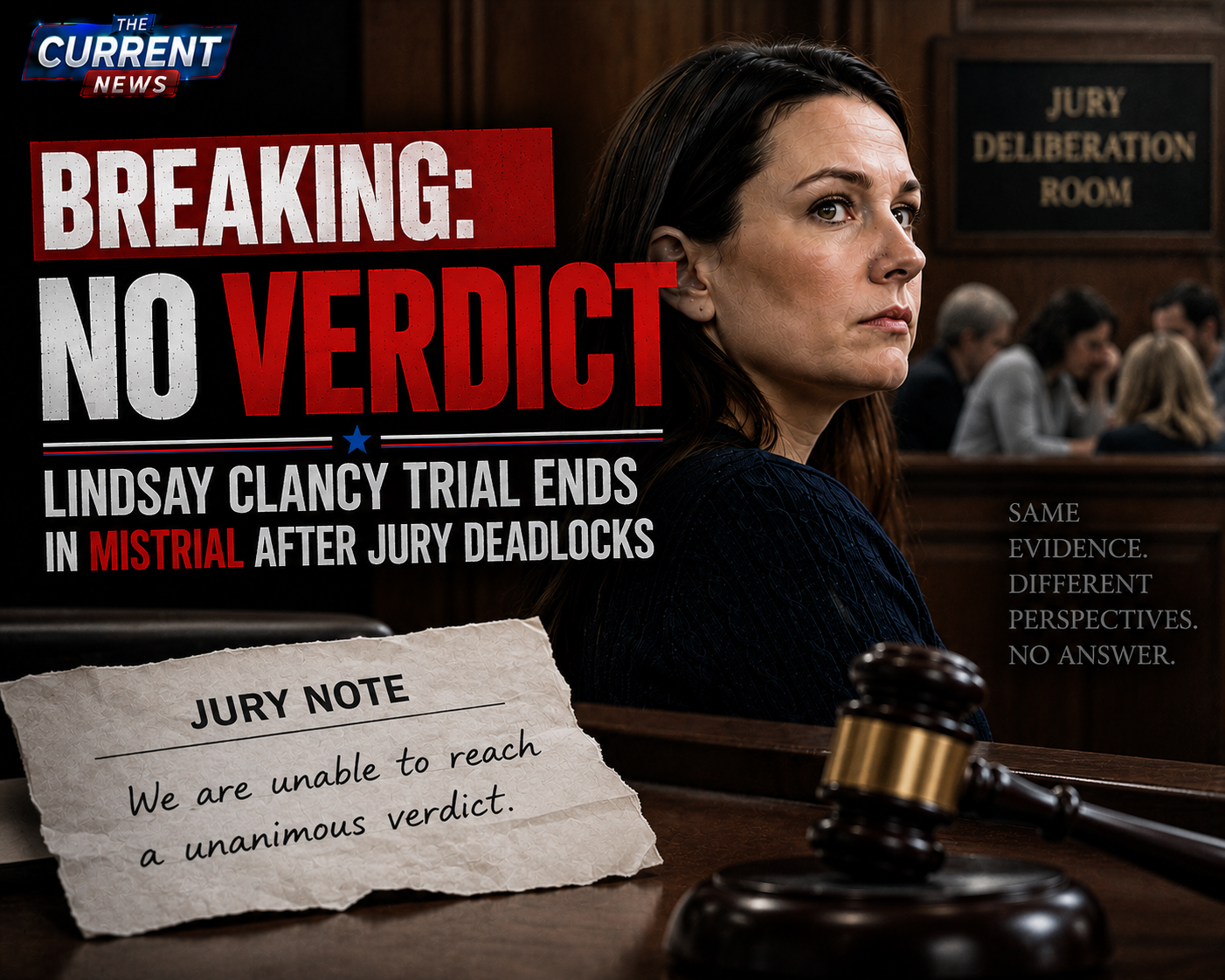
PLYMOUTH, MASSACHUSETTS — After nearly six weeks of testimony, seven days of jury deliberations and more than 38 hours behind closed doors, the Lindsay Clancy murder trial has ended without a verdict.
Judge William Sullivan declared a mistrial Friday after the jury was unable to reach a unanimous decision.
The case that began nearly three years ago with the deaths of three young children has now reached one of the most consequential—and unexpected—turning points possible:
There is no verdict.
And Lindsay Clancy’s legal case is far from over.
THE JURY COULD NOT AGREE
The jury had already reported multiple times that it was deadlocked.
Judge Sullivan had urged the jurors to continue deliberating, including issuing a formal Tuey-Rodriguez instruction, sometimes called a “dynamite charge,” designed to encourage jurors to reconsider their positions while still maintaining their honest convictions.
But after returning for a seventh day, the jury ultimately remained unable to reach unanimity.
According to reporting from the courtroom, the jury was divided 11–1.
One juror’s position ultimately prevented the panel from reaching the unanimous verdict required in the criminal case.
The judge therefore declared a mistrial.
THIS IS NOT AN ACQUITTAL
This distinction is extremely important.
Lindsay Clancy was not found not guilty.
She was not found guilty.
The jury simply could not reach the unanimous verdict required to resolve the charges.
A mistrial caused by a hung jury leaves the criminal case unresolved.
That means the three first-degree murder charges remain pending, and prosecutors now have to determine what they want to do next.
SHE WILL REMAIN IN PSYCHIATRIC CUSTODY
Clancy will not simply walk out of the courthouse.
Following the mistrial, she will remain in custody and under psychiatric care at Tewksbury State Hospital, where she has been held since 2023.
That means today’s ruling does not bring her case to an end.
For now, she remains a defendant facing criminal charges.
THREE YEARS LATER, THERE IS STILL NO ANSWER
The deaths of Clancy’s three children occurred in January 2023.
Cora was 5.
Dawson was 3.
Callan was just 8 months old.
Clancy does not dispute that she killed the children.
The central legal question throughout the trial was why—and whether she was criminally responsible for what she did.
Her defense argued that she was suffering from severe postpartum psychosis and other mental-health problems that left her legally incapable of being held responsible.
Prosecutors argued that Clancy intentionally planned the killings and understood what she was doing.
After weeks of testimony, twelve jurors were asked to decide between those competing explanations.
They couldn’t.
THE MOST IMPORTANT QUESTION WAS NEVER “DID SHE DO IT?”
This case has always been different from many murder trials.
There was never a major dispute over whether Clancy physically killed her children.
The defense’s argument centered on criminal responsibility.
Was she suffering from a mental disease or defect that prevented her from understanding the wrongfulness of her actions?
Or was she mentally ill but still capable of understanding what she was doing and responsible for it?
That distinction became the heart of the trial.
And apparently, it became the dividing line inside the jury room.
THE 11–1 SPLIT
The reported 11–1 split adds another layer to this extraordinary ending.
For days, the public knew the jury was deadlocked.
But the public did not know exactly how divided the jurors were.
Now we have an indication that the disagreement was extraordinarily narrow.
Eleven jurors apparently reached one position.
One juror did not.
But even that fact should be interpreted carefully.
A single juror can prevent a unanimous verdict, and the law does not require a jury to reach a compromise simply because eleven members agree.
One juror can say no.
And if that juror cannot be persuaded without abandoning their honest judgment, the jury remains hung.
THE JUDGE TRIED TO SAVE THE VERDICT
This wasn’t a case where the judge immediately gave up.
The jury had already announced its inability to agree.
Judge Sullivan sent them back.
He encouraged them to continue.
He gave them the formal Tuey-Rodriguez instruction.
They returned to deliberations.
They tried again.
And again.
But eventually, there was nowhere left to go.
The judge declared a mistrial.
AND NOW THE BIG QUESTION: WHAT HAPPENS NEXT?
The ball moves back into the hands of the Plymouth County District Attorney’s Office.
Prosecutors now have several potential paths.
They could seek a new trial with a new jury.
They could pursue some form of plea agreement.
They could potentially decide not to retry the case.
Or additional legal proceedings could determine the next course.
The decision will likely depend on the strength of the evidence, the cost and difficulty of another trial, the circumstances surrounding the deadlock and the interests of the victims’ family.
For now, no final decision has been announced.
A RETRIAL WOULD MEAN STARTING AGAIN
Think about what that would mean.
Another jury.
Another opening statement.
Another presentation of evidence.
Another parade of witnesses.
Another round of psychiatric testimony.
Another cross-examination.
Another group of people forced to confront the details of this tragedy.
And eventually:
Another deliberation.
The first trial took nearly six weeks.
A second trial could become another enormous undertaking.
BUT THE DEFENSE MAY NOT WANT THAT
Clancy’s defense has already signaled opposition to the prospect of another trial.
Her attorney has argued that she has endured enormous physical and emotional consequences since the 2023 killings and that another trial would impose an additional burden.
But the prosecution has its own obligation.
Three children died.
Their deaths remain unresolved in the criminal justice system.
And a mistrial does not erase the charges.
WHAT ABOUT THE FAMILIES?
This is perhaps the most painful part of today’s development.
There is no neat ending.
No verdict.
No definitive legal determination of criminal responsibility.
No sentence.
No acquittal.
Just another waiting period.
The families have now spent more than three years living with the consequences of what happened.
And today’s mistrial means they will continue waiting for an answer.
THE INTERNET WILL HAVE A FIELD DAY
And this is where we need to be especially careful.
Within minutes of today’s mistrial, social media will begin producing explanations.
“The jury knew she was innocent.”
“The jury knew she was guilty.”
“The one juror was biased.”
“The women saved her.”
“The men wanted to convict.”
“Social media caused the deadlock.”
“The defense won.”
“The prosecution won.”
Be careful.
A mistrial doesn’t tell us any of those things.
We know the jury couldn’t reach unanimity.
We know the reported division was 11–1.
We know the judge attempted to get them to continue.
And we know the case ended without a verdict.
Everything beyond that requires evidence.
THE “WHAT IF” QUESTIONS ARE ALREADY BEGINNING
What if that one juror had changed their mind?
What if Judge Sullivan had allowed the jury to deliberate another day?
What if the prosecution had presented different evidence?
What if the defense had called different experts?
What if the jury had reached a verdict?
We can spend the next several years asking those questions.
But the reality is simpler:
This jury couldn’t reach a unanimous decision.
That’s what happened.
A MISTRIAL DOESN’T MEAN THE SYSTEM FAILED
It can certainly feel unsatisfying.
After all this time, everyone wanted an answer.
But a jury isn’t supposed to manufacture a verdict.
The law requires unanimity.
If jurors cannot honestly reach that conclusion, the system has a mechanism for dealing with it.
A mistrial.
It doesn’t mean everyone agrees.
It means everyone couldn’t agree.
And those are very different things.
THE CASE GOES BACK TO WHERE IT WAS
In practical terms, the criminal case now resets to its pretrial posture.
The charges remain.
Clancy remains in custody.
The prosecution must decide whether to move forward with another trial.
The defense can pursue its own legal strategy.
And the court will eventually determine what happens next.
A status hearing is scheduled for September 29.
NEARLY THREE YEARS LATER...
Perhaps that’s the most remarkable part of today’s story.
January 2023.
Three children killed.
A mother survives a suicide attempt and is left paralyzed.
Years of investigation.
Years of court proceedings.
Weeks of testimony.
More than 80 witnesses.
Hundreds of exhibits.
Seven days of jury deliberations.
More than 38 hours of discussion.
And today:
No verdict.
THE CHILDREN DESERVE TO BE REMEMBERED
In the coming days, the legal debate will dominate the headlines.
People will argue about the jury.
They’ll argue about the psychiatrists.
They’ll argue about Clancy’s mental health.
They’ll argue about the prosecution.
They’ll argue about the defense.
They’ll argue about the one juror.
But beneath all of that are three children whose lives ended in January 2023.
Cora.
Dawson.
Callan.
They are the reason this case exists.
WHAT HAPPENS NOW?
There is no immediate answer.
The District Attorney’s Office will have to decide whether to seek a retrial.
The defense will have to decide how it responds.
The court will eventually address the next phase at the September 29 hearing.
And Lindsay Clancy will remain in psychiatric custody while the case remains unresolved.
For everyone who has followed this case for nearly three years, the wait continues.
THE CURRENT NEWS BOTTOM LINE
The Lindsay Clancy trial is over—but the Lindsay Clancy case is not.
A jury could not reach a unanimous verdict.
A mistrial has been declared.
Clancy remains in psychiatric custody.
And prosecutors must now decide whether they are willing to do something extraordinary:
Try the case all over again.
For nearly three years, the country has asked the same question:
What should happen to Lindsay Clancy?
Today, the justice system still doesn’t have an answer.
Perhaps the most important thing we can say right now is also the simplest:
There was no verdict.
The case continues.
And the next chapter has yet to be written.