Port Orange Police Release Video of Officer Shooting
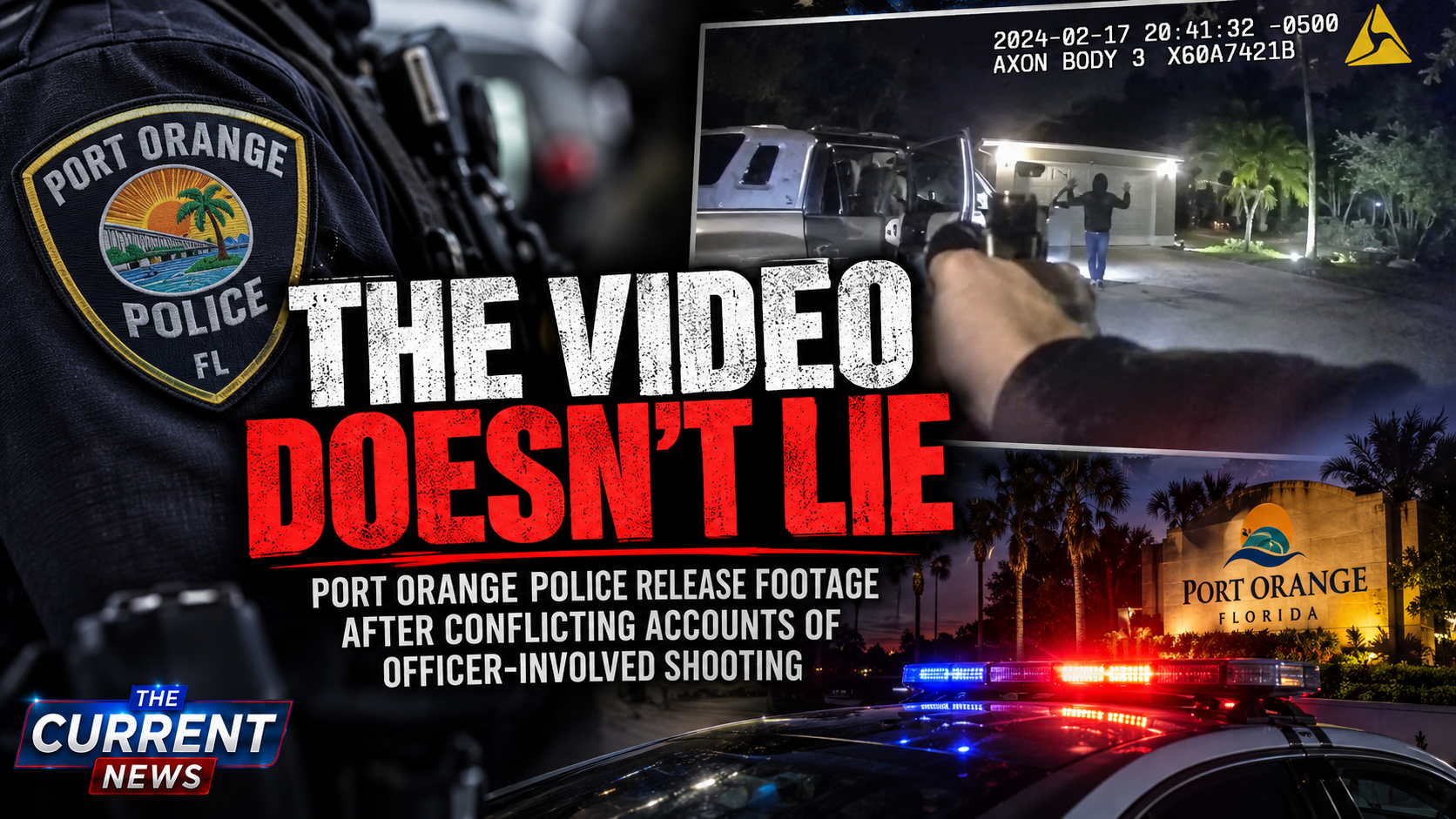
Port Orange police released surveillance video after conflicting accounts of an officer-involved shooting that left 71-year-old Linda Croteau dead.
LIVE FROM ORLANDO, FL — The Current News
A 71-year-old woman walked into a Florida police department armed with a handgun.
She allegedly fired a shot inside the building toward civilian employees.
Officers responded.
She walked outside.
Three officers opened fire.
And now, after conflicting accounts began circulating publicly, Port Orange police have released surveillance footage showing what happened.
The video was released Friday as the department said it wanted to provide transparency and help dispel misinformationsurrounding Thursday morning’s officer-involved shooting.
But there’s another heartbreaking development:
The woman involved has died.
She has been identified as Linda Jean Croteau, 71.
And this story raises an important question about how quickly eyewitness accounts can become “the truth” on social media before investigators have even had the opportunity to release the evidence.
THIS IS WHAT WE WERE TOLD
Thursday morning, Port Orange police responded to their own department after a woman entered the lobby carrying a handgun.
Police Chief Manuel Marino said Croteau interacted with civilian employees in the records area while displaying the firearm.
She then allegedly fired a round inside the lobby in the direction of where employees were working.
An active-shooter call went out.
Officers responded.
Croteau then exited the building and was confronted in the parking lot by three officers.
The officers opened fire.
No police officers or civilian employees were injured.
At the time, police said Croteau was taken to a hospital.
She was later reported to be in critical condition.
On Friday, police announced that she had died.
THEN CAME A DIFFERENT VERSION
While investigators were still working the scene, a bystander named Caleb Lemons gave a very different description of what he believed happened.
Lemons told WFTV that he saw Croteau walk out of the police department with a pistol.
He said the weapon appeared to be pointed toward the ground.
Then, according to his account, she dropped the firearm, walked toward the curb, sat down and put her hands on her head.
And then:
Gunfire.
That account immediately raised an obvious question:
Did police shoot a woman after she had already surrendered?
It’s a serious question.
If true, it would completely change the public’s understanding of the incident.
But there was a problem.
The investigation wasn’t finished.
THE CHIEF DISPUTED THAT ACCOUNT
During Thursday’s press conference, reporters specifically asked Chief Marino whether Croteau had dropped the gun before officers fired.
His answer was direct:
No.
Marino said Croteau was still holding the firearm when officers confronted her.
At that point, the public had two competing accounts.
One came from a bystander.
One came from the police chief.
And neither side had released the full surveillance footage.
That is precisely where social media becomes dangerous.
BECAUSE PEOPLE DON’T LIKE WAITING
Within minutes, people can pick a side.
The headline becomes:
“Police shot elderly woman after she surrendered.”
Or:
“Armed woman attacks police station and gets shot.”
Both versions can spread rapidly.
But the actual circumstances can be much more complicated.
That’s why evidence matters.
That’s why investigations matter.
And that’s why video matters.
NOW WE HAVE THE VIDEO
Port Orange police released surveillance footage Friday.
The department said the release was intended to promote transparency and help dispel misinformation surrounding the shooting.
According to reporting on the footage, it shows Croteau entering the police department carrying a handgun and pointing it toward employees.
She then fires a shot toward the area where civilian staff were working.
She subsequently leaves the building.
The video shows her continuing toward the parking lot while armed, where responding officers confront her.
Officers then open fire.
That doesn’t automatically answer every legal question surrounding the shooting.
But it does provide the public with something far more valuable than speculation:
Evidence.
THE DIFFERENCE BETWEEN “I SAW IT” AND “I SAW EVERYTHING”
This is an important distinction.
The bystander may have genuinely believed he saw Croteau drop the gun.
That doesn’t necessarily mean he was lying.
It doesn’t necessarily mean he was wrong about everything.
But eyewitnesses can have limited perspectives.
They may see only a portion of an incident.
They may not see what happened immediately before or after the moment they observed.
They may not know what officers were seeing from their positions.
And they may interpret movements differently from investigators reviewing multiple camera angles.
That’s why courts don’t simply say:
“One person saw it, therefore that’s what happened.”
Evidence gets examined from multiple angles.
WHAT THE VIDEO CAN AND CANNOT TELL US
The surveillance footage appears to establish important facts about the sequence of events.
But video doesn’t automatically answer every question.
For example:
What exactly did each officer perceive?
What did they know at the moment they fired?
What commands were given?
How quickly did the events unfold?
What did the officers reasonably believe the woman was going to do?
Those questions can matter enormously in determining whether an officer’s use of deadly force was legally justified.
The Florida Department of Law Enforcement is investigating the officer-involved shooting.
AND THAT INVESTIGATION STILL MATTERS
The release of video doesn’t mean the investigation is over.
It doesn’t mean the officers have been cleared.
It doesn’t mean they have been found to have acted unlawfully.
It doesn’t mean every question has been answered.
It means the public now has additional evidence.
FDLE remains responsible for investigating the officer-involved shooting.
That distinction is important.
ANOTHER QUESTION: WHY WAS SHE THERE?
We still don’t have a clear motive.
Chief Marino said investigators had not determined why Croteau entered the department and opened fire.
Her family has reportedly said she had recently lost her husband and had been struggling.
That information may provide context.
But it doesn’t provide a complete explanation.
And we should be careful about turning someone’s personal struggles into an explanation for an act before investigators establish what actually happened.
NO ONE ELSE WAS INJURED
One fact should not get lost in the controversy.
Despite a gun being fired inside a police department, no civilian employees were injured.
No police officers were injured.
The only person physically wounded in the shooting was Croteau.
She later died.
That is an extraordinary outcome considering what could have happened inside a police station filled with employees and civilians.
THIS IS WHY POLICE STATIONS ARE DIFFERENT
Imagine being a civilian employee sitting behind a records counter.
You’re doing your job.
Someone walks through the front door.
They pull out a handgun.
Then a shot is fired.
Suddenly, the building you’ve always associated with safety becomes the location of an active-shooter emergency.
Those employees weren’t expecting to fight anyone.
They weren’t expecting to run for cover.
They weren’t expecting to become part of an officer-involved shooting.
Chief Marino acknowledged the incident was particularly difficult for civilian employees who aren’t trained for these types of critical incidents. The department said it would provide resources to affected employees and officers.
THE REAL LESSON MAY BE ABOUT MISINFORMATION
This is the part that interests us most at The Current News.
Not because we automatically believe every police statement.
And not because we automatically believe every eyewitness.
But because this incident demonstrates why evidence should come before outrage.
Imagine if the video had never been released.
Which version would become the accepted story?
The bystander’s?
The police chief’s?
A TikTok creator’s?
A Facebook post?
A local activist’s?
A national commentator’s?
Within hours, everyone would have their own version.
And most people wouldn’t have actually seen the incident.
VIDEO ISN’T PERFECT — BUT IT’S BETTER THAN GUESSING
We should never pretend that a surveillance camera captures everything.
It may lack audio.
It may have blind spots.
It may not show exactly what an officer saw.
It may not capture the perspective of the person being confronted.
But it’s still dramatically better than attempting to reconstruct an incident entirely from secondhand accounts.
That’s especially true when the event happened quickly.
THE QUESTION WE SHOULD BE ASKING
Instead of:
“Who do you believe?”
Maybe the better question is:
“What does the evidence show?”
That’s the standard we should apply whether we’re talking about police officers or citizens.
If the evidence eventually demonstrates that officers acted appropriately, say so.
If investigators find misconduct, say so.
If important questions remain unanswered, say that too.
That’s what responsible journalism should look like.
DON’T TURN LINDA CROTEAU INTO A POLITICAL SYMBOL
Croteau was a 71-year-old woman.
She walked into a police department with a gun.
A shot was fired inside.
She was confronted by officers.
She was shot.
She later died.
Whatever political opinions someone may have about policing, guns, mental health or use of force, those facts should be enough to remind us that this was a human tragedy.
We don’t need to manufacture additional details to make it meaningful.
THE OFFICERS WILL NOW HAVE TO LIVE WITH THIS
Three officers were involved.
None were injured.
But an officer-involved shooting doesn’t end when the gunfire stops.
There will be an investigation.
There will be questions.
There will be scrutiny.
There will be reports.
And there will likely be continued public discussion about whether the officers’ actions were justified.
That’s part of accountability.
Police officers should be held accountable when they violate the law.
But officers should also be allowed to defend themselves when confronted with a deadly threat.
The evidence—not our political preferences—should determine which category this incident falls into.
AND THAT’S WHY THE VIDEO MATTERS
Before the video, we had competing accounts.
After the video, we have additional evidence.
That doesn’t mean every question has been answered.
But it does mean the public can begin moving away from:
“Someone said...”
and toward:
“Let’s look at what actually happened.”
THE CURRENT NEWS BOTTOM LINE
A woman entered a Port Orange police station armed with a handgun.
Police say she fired a shot toward civilian employees.
She exited the building.
Three officers confronted her.
The officers opened fire.
A bystander publicly described the encounter differently, saying he believed Croteau had dropped the gun and surrendered before the officers fired.
Police disputed that characterization.
Now surveillance footage has been released.
And the footage is being used by the department to address what it calls misinformation surrounding the shooting.
Croteau has since died.
FDLE continues to investigate.
And that investigation should be allowed to run its course.
Don’t let the internet decide what happened before the evidence does.
Because in an age where everyone wants to be the first person with the answer, sometimes the most responsible thing a news organization can say is:
Wait.
Watch the evidence.
Then decide.
LIVE FROM ORLANDO
This is The Current News, reporting from Central Florida.
A tragic incident at a Port Orange police station has now become a larger conversation about police use of force, eyewitness accounts, surveillance footage and the speed at which misinformation can spread.
The investigation isn’t over.
But now, the public has something it didn’t have yesterday: